
Salman Schocken
Businessman with Flair and Bibliophile Cultural Patron
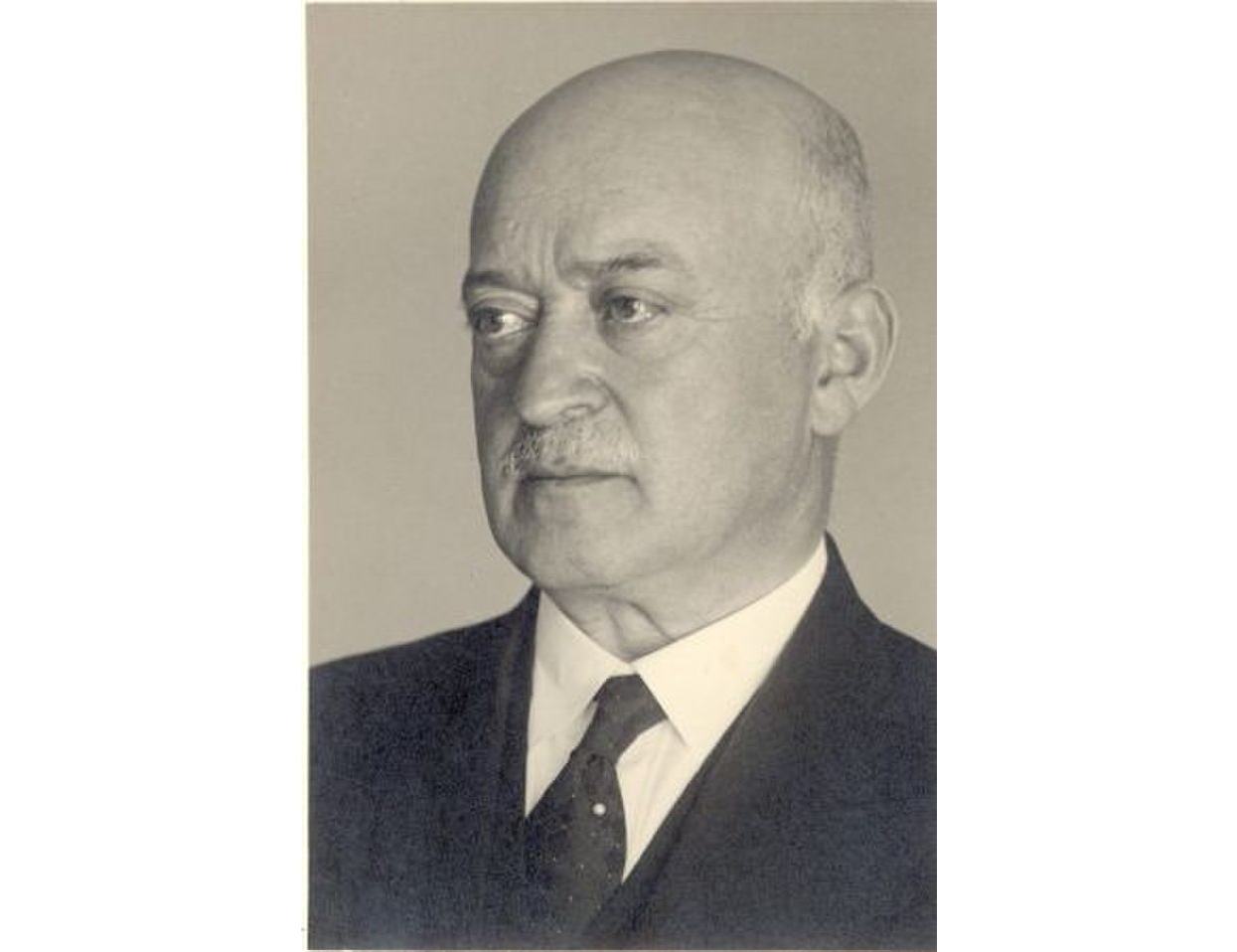
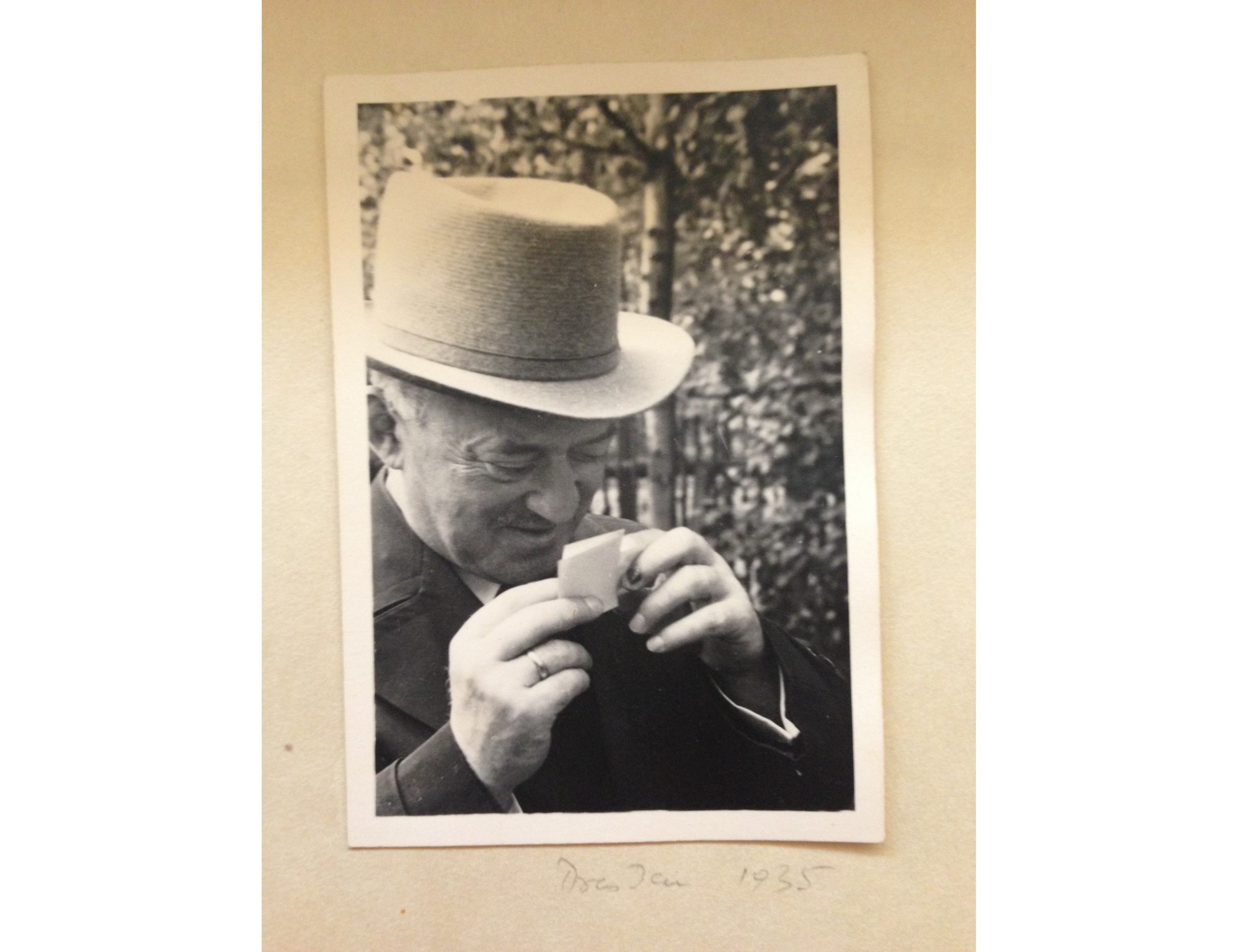
Name: Salman Schocken
Life data:
Born: 29 October 1877 in Margonin near Poznan
Deceased: 6 August 1959 in Pontresina, Switzerland
Residences: Berlin, Leipzig, Zwickau, Jerusalem, Scarsdale bei New York
GND: 118609890
"His life was a saga, not just a political one; it was also a human drama, and like a real drama, sometimes ironic, sometimes tragic and sometimes absurd."
Amos Elon on Salman Schocken
A life in the 20th century
Salman Schocken's life symbolises the upheavals and cultural highlights of the first half of the 20th century. His biography reflects economic prosperity and innovative entrepreneurial spirit, cultural diligence and genuine curiosity as well as the search for a place in the "age of extremes" (Eric Hobsbawm).
Schocken was many things in the 81 years of his life - a businessman, founder and CEO; publisher, bibliophile and patron; world traveller, exile and seeker. Although he lived most of his life outside Saxony, his activities here were crucial to his economic success.
The department stores
Salman Schocken was born in 1877 as the youngest child of a Jewish family in Margonin, a small town in the then Prussian province of Posen. Despite his ambitions, he was unable to attend grammar school due to his family's financial situation and instead completed a commercial apprenticeship. After a brief stint in Gniezno (Gniezno) and Berlin, Schocken came to Leipzig, where he worked as a merchant. In 1902, he followed the call of his brother Simon (1874-1929), who had taken over the Ury brothers' department stores' in Zwickau and asked Salman to support him in the management. In 1904, they opened their first independent department stores', Schocken, in Oelsnitz in the Ore Mountains. By 1933, over 30 department stores had followed in the German Reich, most of them in Saxony, for example in Auerbach, Aue, Crimmitschau, Frankenberg, Freiberg and Meissen.
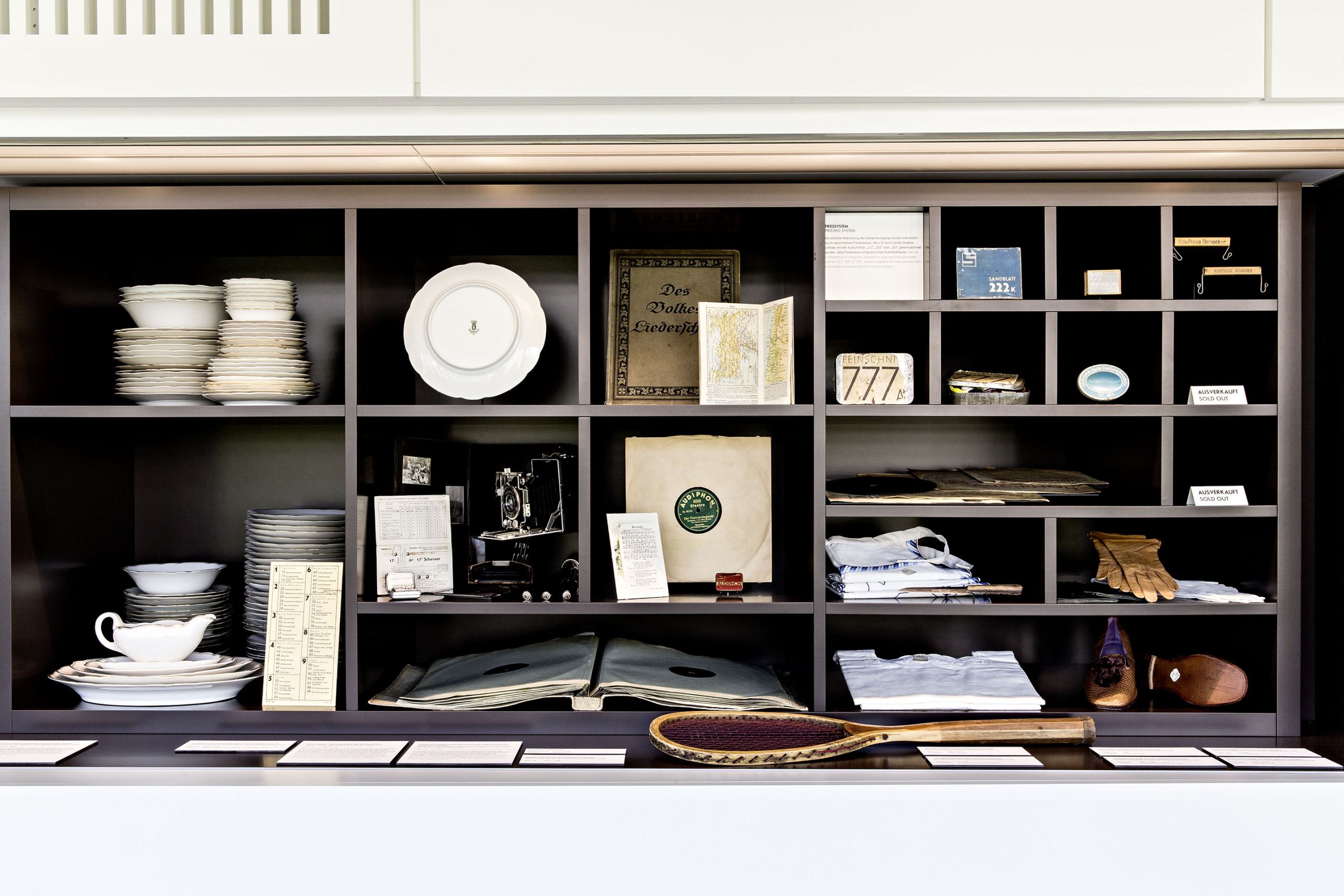
The Schocken brothers took a special approach with their department stores. Unlike competitors such as Tietz or Wertheim, the product range was aimed at the entire population. High-quality goods were to be offered at affordable prices. This was achieved through a clever purchasing policy that provided for long-term contracts with suppliers. All the threads came together at the company headquarters in Zwickau. From purchasing to advertising and even shop window design, everything was strictly scrutinised and specified to the branches. Schocken even set up its own laboratory to test and further develop purchased goods, and later also the Schocken own brands. The first head of the laboratory, Dr Erich Kann, emigrated to Great Britain in 1933 and continued his work there for the renowned Marks & Spencer group.
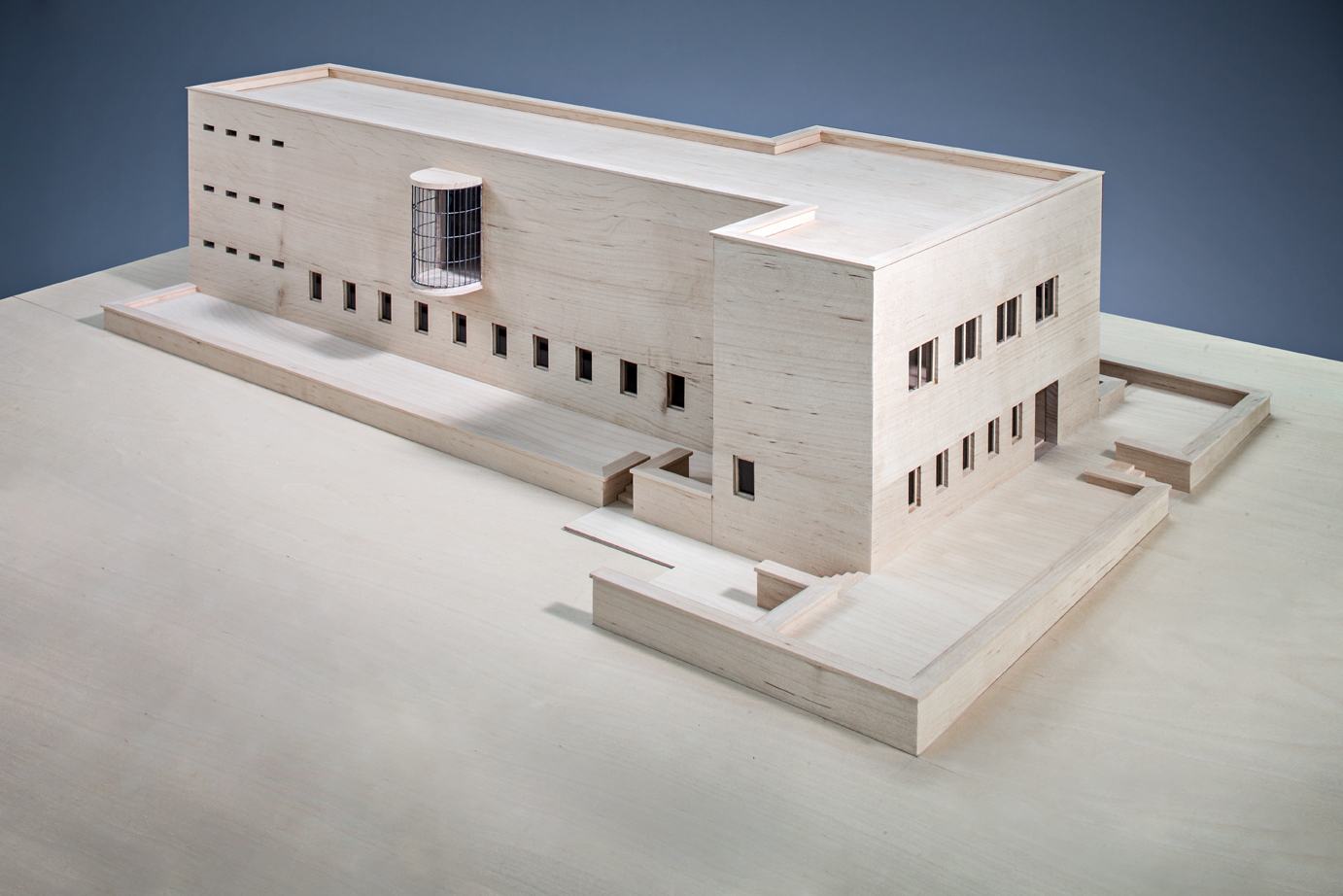
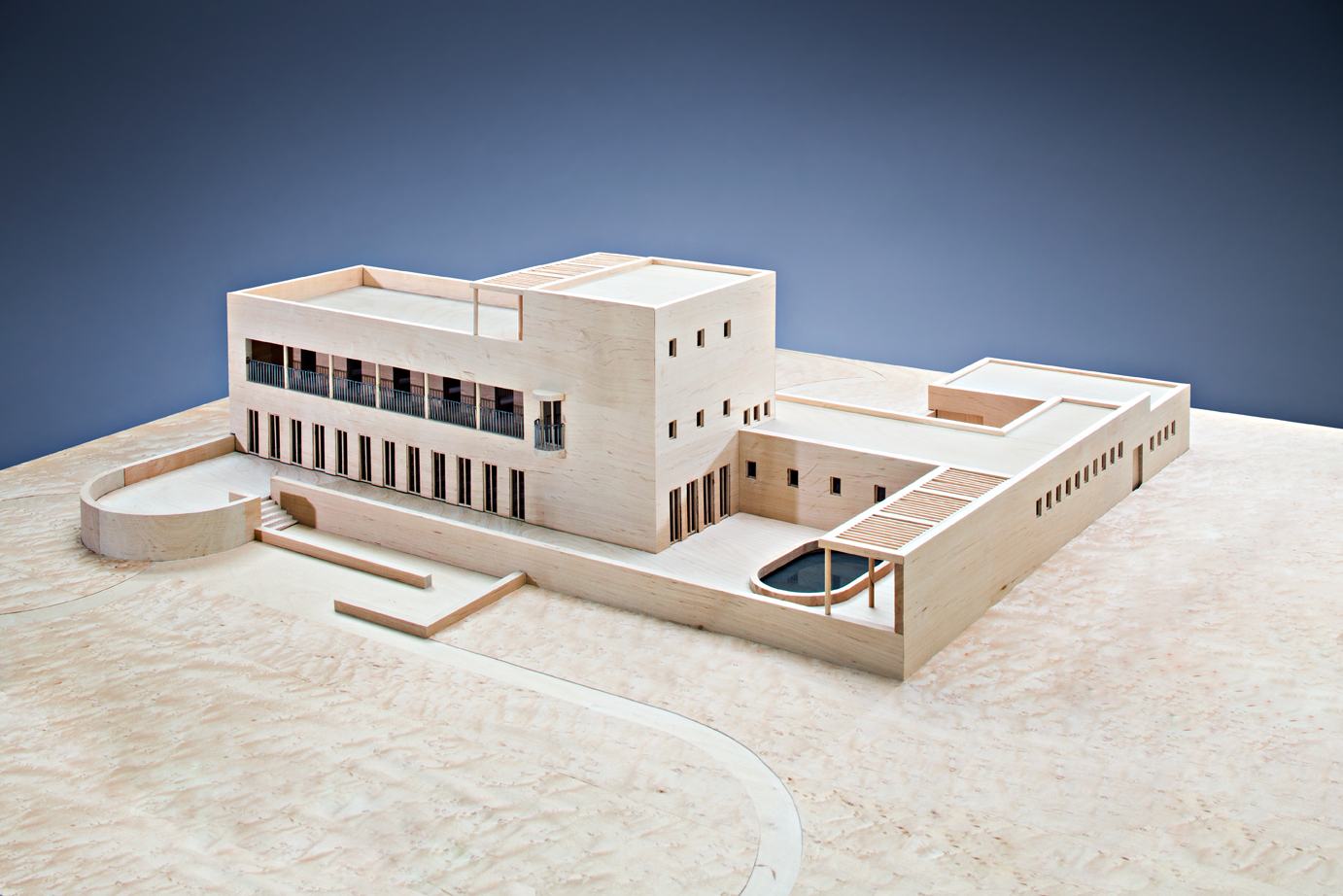
The laboratory is just one example of the innovative spirit of the Schocken brothers. Modern influences were also incorporated into the design of the product display and the Schocken brand. The Schocken-S, which became the company's trademark, was inspired by the Bauhaus. Clear forms were also found in the design of the department stores themselves. In the 1920s, collaboration began with the young architect Erich Mendelsohn, who designed the department stores for Schocken in Nuremberg (1926), Stuttgart (1928) and Chemnitz (1930). Even after emigrating, Mendelsohn remained a trusted partner for Salman Schocken and built, among other things, Schocken's villa and the library in Jerusalem, which is still impressive today.
"My library is my autobiography" - books as the meaning of life
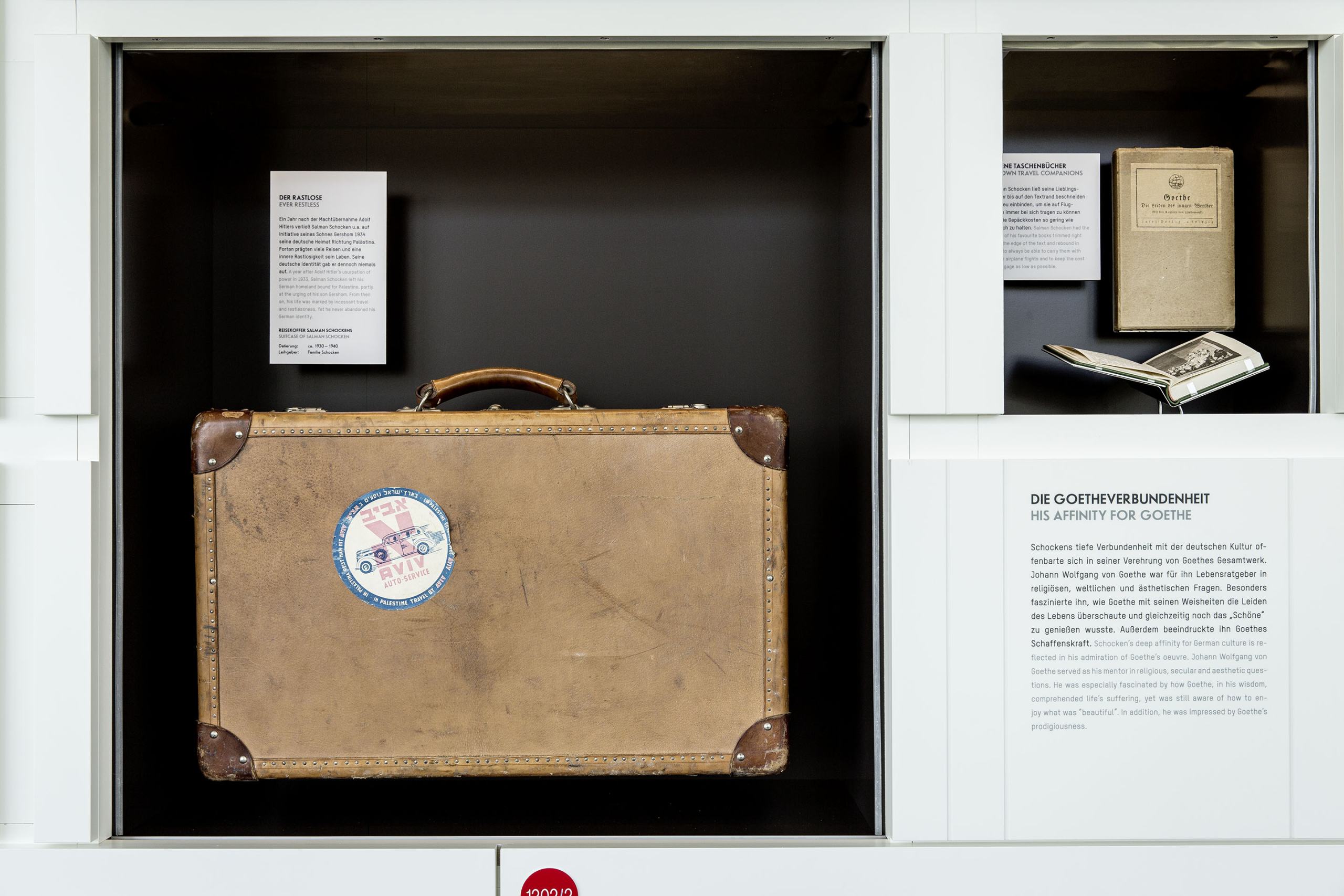
According to biographer Stefanie Mahrer, books were Salman Schocken's "real life theme". Schocken himself once summarised: "My library is my autobiography." And indeed, his passion for books in their entirety - from the content to the typeface to the binding - was one of the central constants in his life. He started collecting books at an early age and taught himself how to read. He compensated for his lack of a university education with an enormous thirst for knowledge. He also wanted to pass this bibliophilia on to his customers. According to Schocken, his department stores were not only intended for consumption, but also to raise the cultural level of the city. For this reason, a carefully curated selection of books was always offered alongside everyday necessities. Schocken himself was a great fan of German classicism, especially Goethe. He collected Goethe's manuscripts and repeatedly sought inspiration in his works.
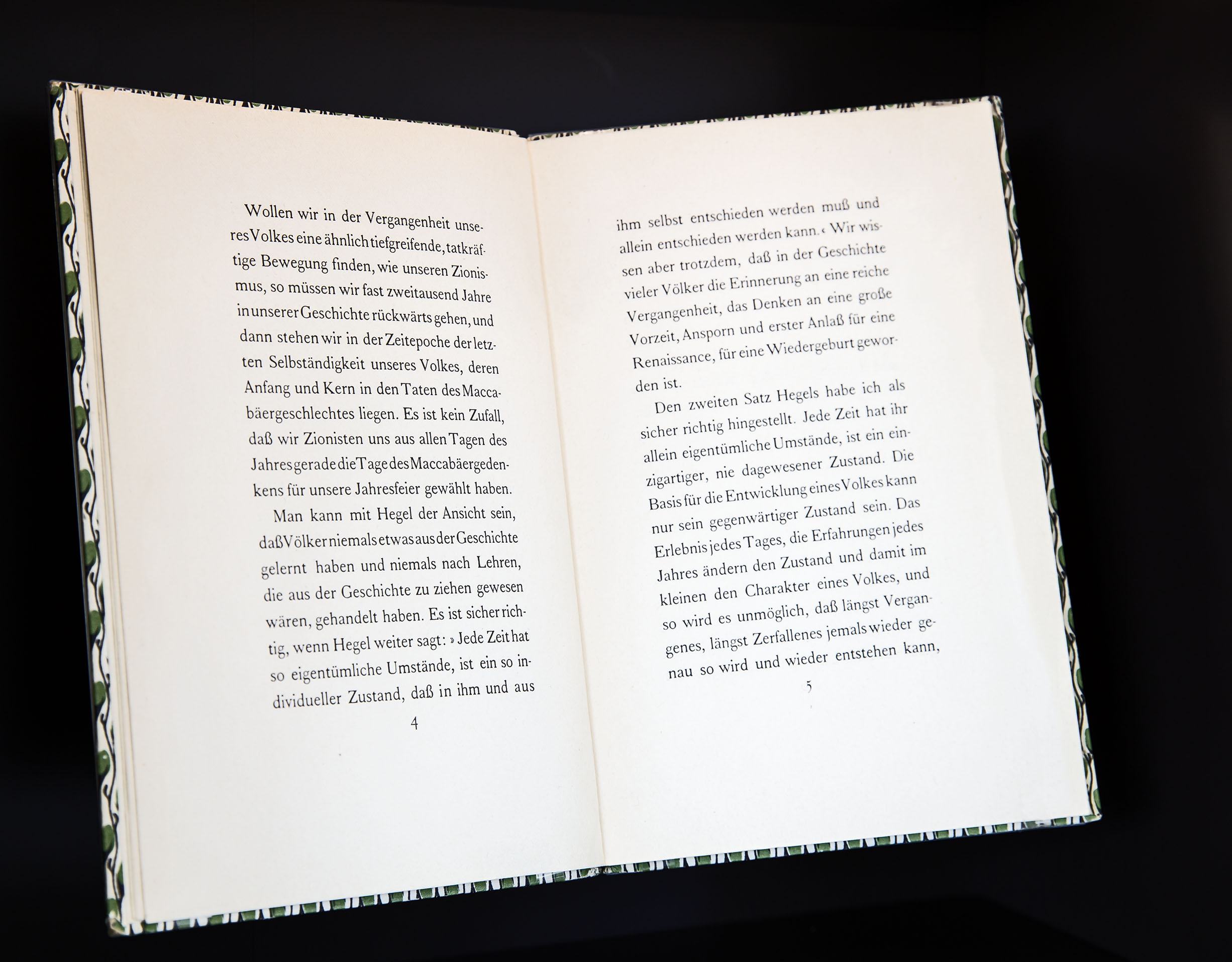
Throughout his life, Schocken was also interested in Judaism and its writings. However, he was initially critical of the Zionism that emerged in the late 19th century, especially its representative Theodor Herzl. However, he was even more critical of the idea that German Jews had to assimilate in order to supposedly become true Germans. Schocken always saw himself as a German and Jew and never considered denying or abandoning his origins. Rather, he argued in favour of a cultural renewal of Judaism, as he did in his "Maccabee speech" in Chemnitz in December 1913. He therefore approached the Zionist idea from a cultural and social perspective. Political Zionism, i.e. the project of founding a state in Palestine, was of secondary importance to him. After the First World War, however, he was appointed to the Jewish National Fund, which bought land for Jews who wanted to settle in the then British Mandate territory. Schocken was to help shape the Fund's economic policy and travelled to Palestine for the first time in 1922. However, moving to the Mandate territory was not yet an option for him at this time.
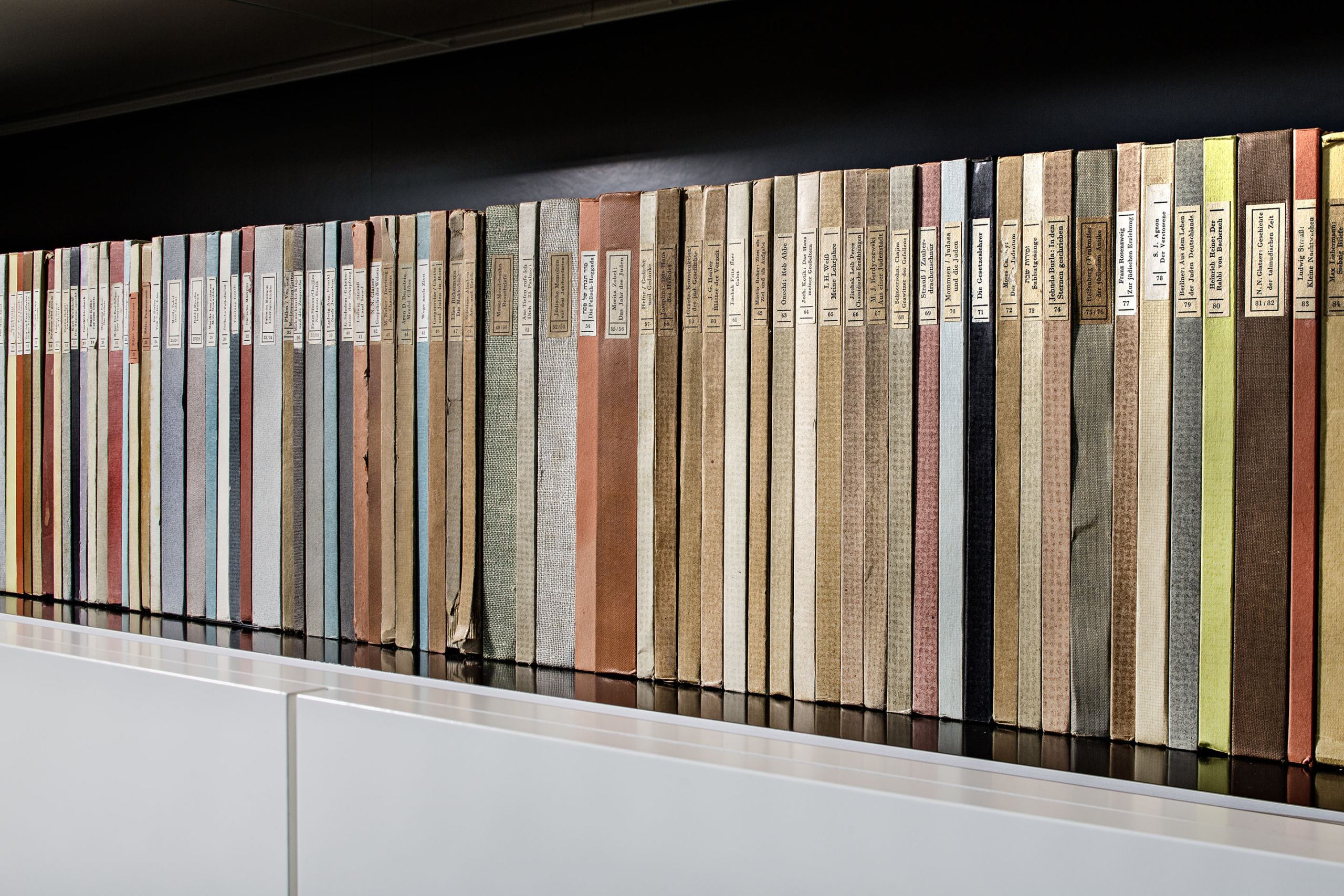
In 1931, Schocken fulfilled a long-held wish and founded his own publishing house in Berlin. Schocken Verlag published classics by Jewish authors, religious and philosophical writings and was founded by Salman Schocken to promote the idea of cultural Zionism. In a very short time, the publishing house presented a remarkable programme, including the now legendary Schocken-Bücherei. These small volumes, modelled on the Insel-Verlag series, included works by Moses Mendelssohn, classics of Jewish and Yiddish literature such as Scholem Aleichem or Mendele Moicher Sforim, philosophers such as Franz Rosenzweig, Martin Buber or Gershom Scholem and representatives of modern literature Franz Kafka or Samuel J. Agnon.
Flight, exile and two new beginnings
However, the transfer of power to the National Socialists in 1933 fundamentally changed Salman Schocken's life. Initially, he stoically held on to the department stores' chain and the publishing house, especially as the department stores in particular continued to generate good sales despite the first boycotts and harassment by the Nazi authorities. In 1934, however, Salman Schocken moved to Jerusalem. He now managed the operational business from Palestine, while individual confidants remained in Germany. But even for them, remaining in Germany became increasingly threatening. Schocken's long-standing managing director, Georg Manasse, fled with his family to Sweden in 1935 and finally to the USA in 1940. Schocken offered the other 250 or so Jewish employees financial and organisational help with their emigration. The majority of this group accepted the offer and were able to flee Germany.
In November 1938, numerous Schocken branches were destroyed, for example in Frankenberg, Aue and Oelsnitz. Justin Sonder (1925-2020) from Chemnitz later recalled: "I saw SS men in black uniforms, SA men in brown uniforms and many men armed with hatchets and dressed as robbers smashing the large shop windows of Schockens." In 1936, Schocken sold a majority stake in the company to a British banking group in order for the group to be considered non-Jewish in the eyes of the National Socialists. After the November pogroms, however, the systematic exclusion of Jewish traders came to an end and Schocken was forced to sell all its shares to German banks. Schocken AG continued to operate as Merkur Aktiengesellschaft from 1939. His publishing house also had to close in 1938.
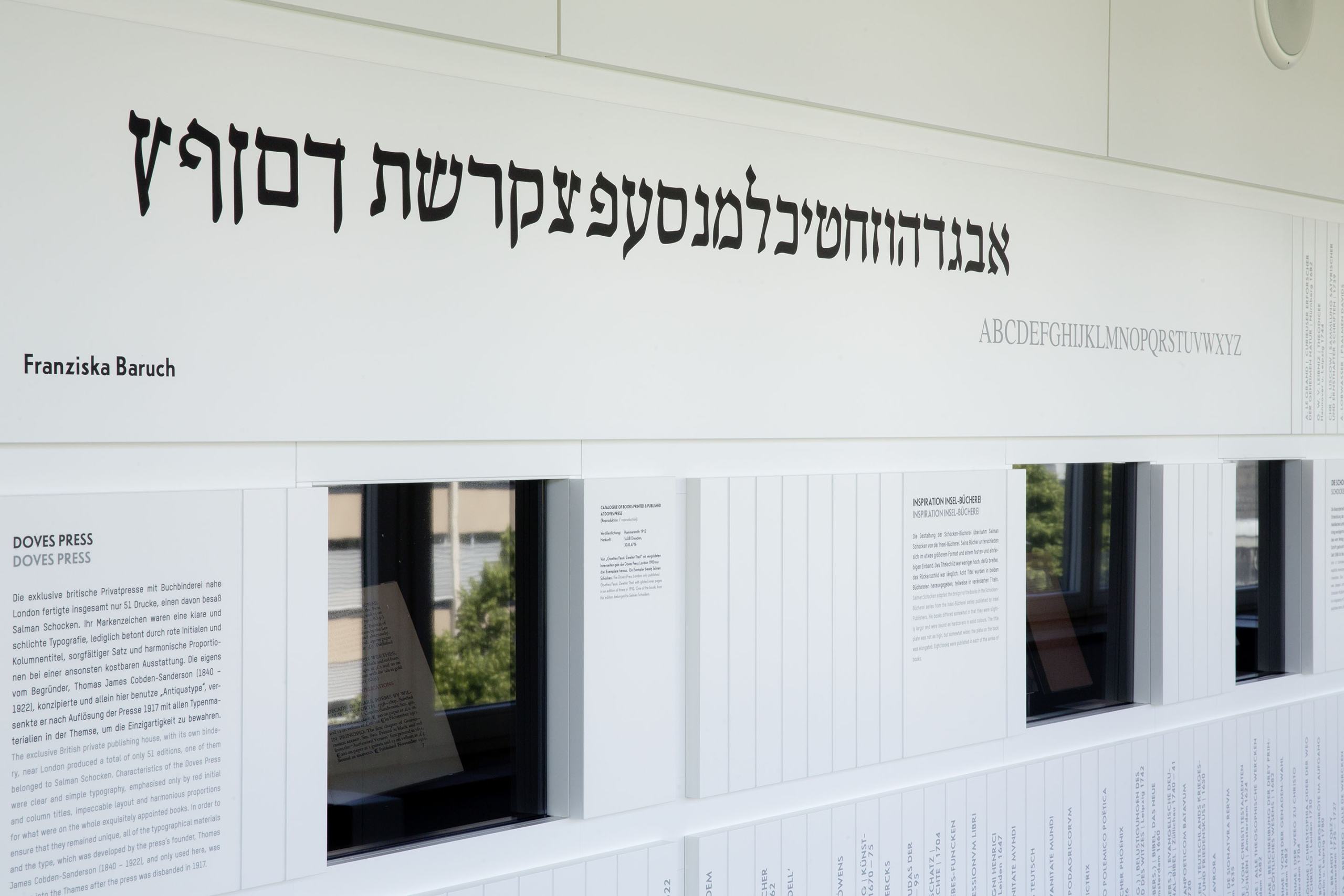
Salman Schocken founded the Schocken Publishing House in Tel Aviv in 1937 in order to continue his publishing activities. As early as 1935, he bought the daily newspaper Haʾaretz, which his son Gershom ran as editor-in-chief until 1990. In 1936, he opened his library in Jerusalem, where he housed the book collections he had rescued from Berlin and expanded them by purchasing rare Hebrew manuscripts. As chancellor, he also promoted the further expansion of the Hebrew University in Jerusalem. However, Schocken remained true to his origins and travelled to Europe several times and for long periods during these years. The start of the war in 1939 made this impossible and was probably the decisive factor in him, now over 60 years old, taking a further step and moving to New York in 1940. During this time, he increasingly devoted himself to his bibliophile passion. In 1943, he commissioned the graphic artist Franzisca Baruch to design his own typeface for Hebrew letters. In 1945, he finally founded another publishing house, Schocken Books, and tried to conquer the American market with his programme of Jewish classics. However, the public at the time was hardly interested in these titles and so the publishing house remained primarily an island for Salman Schocken and a reminiscence of the Berlin publishing house of the 1930s.
After the Second World War, a new era dawned in which Salman Schocken found it increasingly difficult to find his feet. Professionally, biographically and intellectually, he had been socialised in the bourgeois-conservative and Jewish, cultural-Zionist world of the late 19th and early 20th centuries. This world came to an end with the end of the war in 1945. Economically, he achieved little during this phase. In 1949, the shares in the department stores that were now in the Federal Republic of Germany were returned to him. But as early as 1953, he sold all his shares to Horten Warenhäuser. The majority of the former branches were also located in the GDR and were expropriated as state property. From 1952, Schocken Books Verlag in New York published barely more than two to four new titles a year. A Kafka edition was published in 1957, the last book for the time being. Today, the publishing house is part of a global chain. Attempts to buy and revive it have failed for the time being.
Salman Schocken died in 1959 during a summer holiday in Pontresina in the Swiss Alps. When he was found, he is said to have been holding Goethe's "Faust II" and Martin Buber's "Stories of Rabbi Nachman" in his hands. Schocken lived for books until the end.
(Alexander Walther)
Schocken in Saxony - a digital exhibition
To mark the Year of Jewish Culture in Saxony, the State Museum of Archaeology (smac) is preparing a digital exhibition on the Schocken Group in Saxony. In particular, the company's files in the Saxon State Archives in Chemnitz are being analysed.
"Operation and idea". Salman Schocken's universe in the Jerusalem archive
The Leibniz Institute for Jewish History and Culture - Simon Dubnow is developing a publication and exhibition on Salman Shocken's archive in Jerusalem and presenting him as a "transnational storehouse of knowledge". The project is being led by historian Dr Caroline Jessen.
Source:
- Schocken, Gershom: Ich werde seinesgleichen nicht mehr sehen, in: Der Monat 20:242 (1968), S. 13-30
- Mahrer, Stefanie: Salman Schocken. Topographien eines Lebens, Berlin 2021
- Dahm, Volker: Das jüdische Buch im Dritten Reich, München 1993
- Borrmann, Antje / Mölders, Doreen / Wolfram, Sabine (Hrsg.): Konsum und Gestalt. Leben und Werk von Salman Schocken und Erich Mendelsohn vor 1933 und im Exil, Berlin 2016
- Bildungsangebot des smac - der Museumskoffer "Aufbruch in die Moderne – Jüdische Identitäten in Chemnitz (1871 bis 1933/38)"