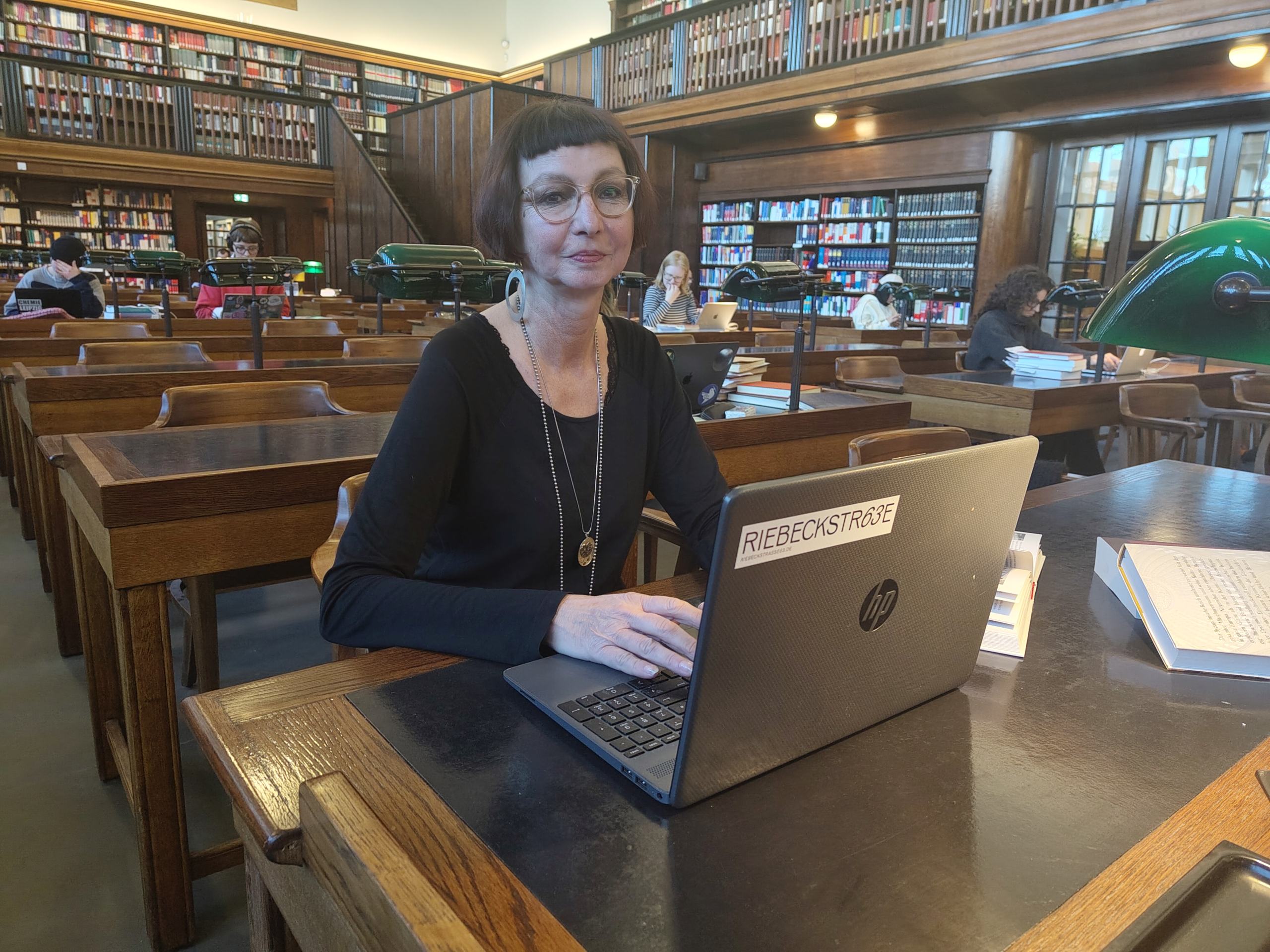
Interview with Dr Francesca Weil
We spoke to the historians at the Hannah Arendt Institute for Research into Totalitarianism about their work on the migration of Jewish women.
What role does Jewish history play in your research?
Jewish history, just like research into historical anti-Semitism, occupies a significant place in my research. As far as Jewish history is concerned, I am particularly interested in the history of Jewish women, and at present, above all, in the life stories of Jewish women who fled the Nazis between 1933 and 1945. Research into historical anti-Semitism is an integral part of many of my studies. For me, the history of Nazism is inconceivable without taking into account the Holocaust and experiences of anti-Semitism. In my publications, I focus intently on how anti-Semitic exclusion manifested itself in everyday life and in institutional contexts – always with an eye to social and personal connections. It is important to me to highlight the perspectives of those affected and to give them a voice in historiographical discourse. This is evident in my projects on Jewish women who fled, as well as in my monograph published in 2020, ‘“We seem to be in the same situation as the Führer …” On late Saxon wartime society (1943–1945)’.
What is your project ‘Women who migrated from, to and within Germany (1918–2018)’ about?
The collaborative network ‘Women who migrated from, to and within Germany (1918–2018). Interdisciplinary Analyses’ has been in existence since 2020. All the individual projects within the network examine migration and flight across the three classic phases: the situation in the country of origin, experiences during migration, and integration in the countries of arrival. Particular focus is placed on the behaviour of host societies. Building on gender-sensitive migration research, the project centres in particular on the question of the emancipatory effects of migration. The research examined the extent to which, and under what conditions, migration opened up professional and social opportunities for women that would not have been available to them in a comparable way in their countries of origin, and where, at the same time, new barriers arose. Societal conditions in both countries of origin and destination play a central role in this regard.
http://www.frauen-migrationsforschung.de/
What gaps in research were you seeking to address?
It is clear that there have been, and continue to be, significant gender-specific differences with regard to the causes and conditions of migration, as well as the opportunities and recognition afforded in asylum cases. If the category of gender is not addressed in research, important factors for understanding the motives for migration and the living conditions of women in their countries of destination are ignored. Migration research that consistently adopts a gender-based approach examines the relationships between women and men, and between them and the social context. Research on ‘migration and gender’ shows that women have experienced specific circumstances, scope for action, advantages and barriers to integration that are closely linked to gender roles and expectations. Women also play a significant role in shaping the course and nature of migration – more so than previously assumed. There are now numerous social science publications on specific aspects of migration, including the flight of women. However, in historical women’s and gender studies, greater attention should still be paid to the situation and experiences of these women. In migration studies, a heterogeneous picture of migrant women has increasingly emerged, reflecting the diverse educational backgrounds, life experiences, motives for migration and migratory backgrounds they have brought or continue to bring with them. Both the shortcomings and the successes of migration are identified in detail. However, a comprehensive interdisciplinary analysis addressing complex questions concerning women from selected and diverse migration movements to, from and within Germany over a longer historical period, structured into several individual projects – such as the one planned here – does not yet exist.
How did the experiences of Jewish women differ from those of non-Jewish women?
There are both differences and similarities in the experiences of Jewish and non-Jewish women. There are groups of women, such as the Hazara in Afghanistan, who, much like Jewish women, were or are persecuted for ethnic and religious reasons and had to or have to flee. In the case of Hazara women, however, there is an additional reason for persecution: they were/are oppressed by the Taliban simply because they were/are women. In contrast, German women who fled at the end of the Second World War differed significantly from Jewish women. These women did not flee because of ethnic or religious persecution, but to escape the bombings and the Allies, in particular the Red Army.
The project was part of a larger research initiative called DIKUSA—Networking Digital Cultural Data in Saxony. What is it all about?
The DIKUSA project is part of the collaborative network "Women Migrating From, To, and Within Germany (1918–2018): Interdisciplinary Analyses," which has been active since 2020. Across all sub-projects, migration and flight are examined through the lens of three classic phases: the situation in the country of origin, experiences during migration, and integration into the destination countries. A particular focus is placed on the behavior of host societies. The project’s findings are to be visualized in a publicly accessible database and via interactive maps. These resources target a broad audience: researchers, museums, civic educators, and the interested public. The maps reveal connections between backgrounds, social status, escape routes, and opportunities for emancipation, allowing different waves of flight to be compared—such as those fleeing the Nazi regime versus those escaping contemporary authoritarian regimes. At the end of 2025, the DIKUSA-HAIT project "Women Migrating From, To, and Within Germany – Building a Knowledge Base on the History of Experience" was successfully concluded:
https://saxorum.hypotheses.org/11007
How can the data collected during your research be preserved for the long term and utilized for future studies?
They can be preserved in both print and digital formats. Ideally, both—to ensure data security and preservation. From a historian's perspective, what do you hope to see come out of the Year of Jewish Culture? It is important to me that Jewish culture, history, and experiences are brought closer to people in Saxony and beyond once again. In my view, this can help curb the rise of antisemitism in our country. For these reasons, I am also very pleased that a Yad Vashem branch office is to be established in Germany. One of the two cities where the branch will be set up is Leipzig—the city where I live.
Do you have a favorite Yiddish or Hebrew word?
Shlomo. For one thing, I like the word itself; for another, I like its meaning: Shlomo is a traditional Hebrew male first name. The name derives from the Hebrew shalom, meaning peace or well-being. Literal translations of the name include: the peaceful one, the one who brings peace, and his peace.