
Charlotte Charlaque and Toni Ebel
Trendsetters whose Influence Endures
A magazine written and designed by fifteen pupils from class GsGy24-1 at the Ruth-Pfau-Schule in Leipzig as part of the 2026 Leo-Trepp Pupils’ Prize.
The project
Since 2021, the Leo Trepp Foundation has been organising a school competition on various topics relating to Jewish history, culture and religion. In 2026, the competition’s theme was “One People. Many Faces".
Four of the six award-winning projects came from Saxony. One of the two second places went to the project “Charlotte Charlaque and Toni Ebel. Trendsetters ahead of their time" by class GsGy24-1 at the Ruth-Pfau-Schule in Leipzig.
The protagonists
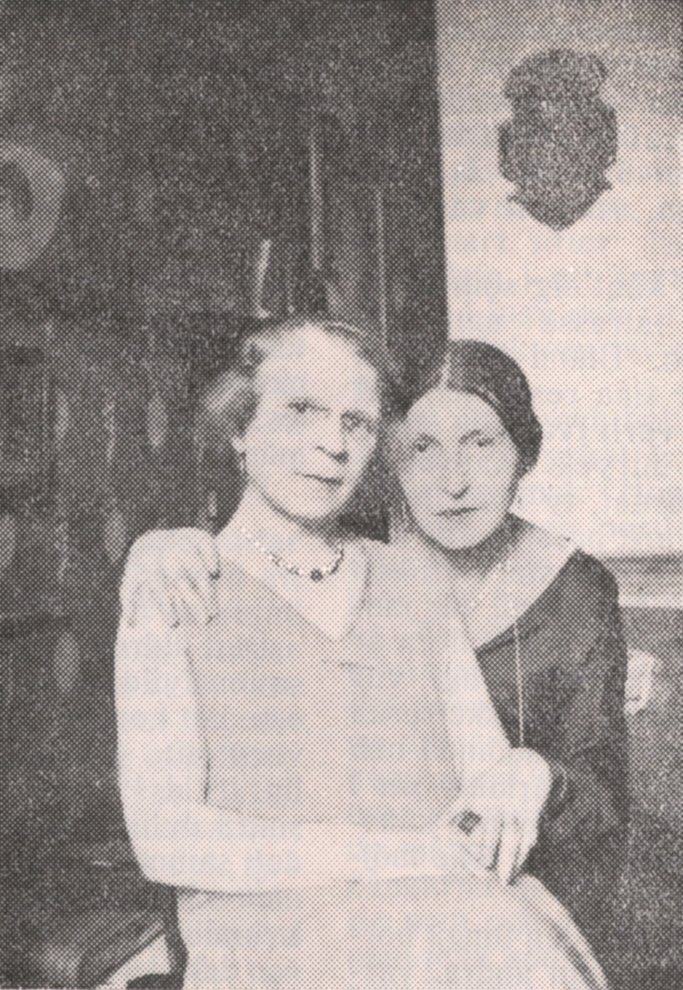
Charlotte Charlaque and Toni Ebel were pioneers and trendsetters.
Charlaque (1892–1963) grew up in Berlin in a Jewish family, later lived in the USA, but returned to Berlin in the 1920s. Between 1929 and 1931, Charlotte underwent some of the earliest known gender-affirming procedures at the Institute for Sexual Science in Berlin.
Ebel (1881–1961) also grew up in Berlin and became a painter. Born Hugo Otto Arno Ebel, she was conscripted in 1916 and fought in the First World War. In 1928, she was issued with a ‘transvestite permit’, which allowed her to appear in public as a woman. However, her application to change her name in 1929 was rejected. Between 1929 and 1932, she underwent several gender-affirming operations at the Institute for Sexual Science.
Charlotte and Toni met at the Institute and fell in love. They moved into a flat together. In 1933, Toni converted to Judaism – in protest against the rise of the Nazis and out of love for Charlotte. In 1934, the couple fled to Czechoslovakia. In March 1942, Charlotte Charlaque was arrested, but was rescued through mediation and the help of a Swiss diplomat and made her way to New York. There she eked out a living as an actress and died in poverty in 1963.
Toni Ebel remained alone in Prague, returned to Berlin after the war and, following the establishment of the two German states, stayed in the eastern part of the city. She worked as a painter, specialising mainly in portraits and landscapes. She died in Berlin in 1961.
The leaflet
The project’s great merit lies in bringing new attention to two women who were previously known only within expert circles. Charlotte Charlaque and Toni Ebel are a striking example of the fact that discussions about gender, identity and diversity are by no means new, but were already taking place and being lived out as early as the 1920s. And they illustrate the life journeys of two Jewish women amidst the turmoil of the 20th century.
GND: 1245087673