
Siegmund Rotstein
A leading figure in the Chemnitz community
* 30.11.1925 in Chemnitz
✡ 06.08.2020 in Chemnitz

Life and Work
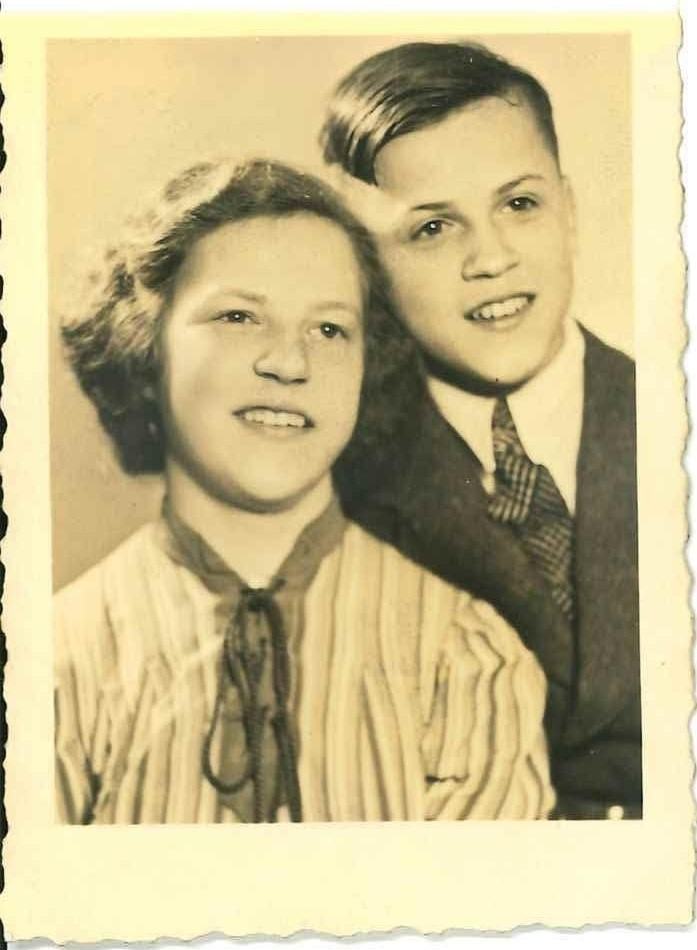
Matthias Siegmund Rotstein was born in 1925, the son of Jankel Hersch Rotstein, a merchant originally from Russian Poland. He lived with his four siblings and parents at 1 Alexanderstraße (now Ludwig-Kirsch-Straße) in the Sonnenberg district of Chemnitz and attended the Lessing School.
In 1938, he began an apprenticeship as a tailor, and his Bar Mitzvah was due to take place in November of that year – however, due to the November pogroms, it was postponed and eventually held in 1939 with Cantor Hartwig Langenbach.

Life under National Socialism
In September 1939, his father was arrested and deported to the Warsaw Ghetto, where he starved to death.
A year later, Siegmund was in Havelberg (Mark) undergoing ‘Hachshara’ – the systematic preparation of Jewish people for emigration to Palestine – and at the Beth Noar preparatory camp in Hamburg. In May 1941, he travelled on to the Ahrensdorf estate near Luckenwalde; in October, he moved to Berlin, where, among other things, he carried out auxiliary work at the Jewish cemetery in Weißensee.
When he returns to Chemnitz in April 1942, he is immediately conscripted for forced labour at the E. F. Barthel lighting factory in Altchemnitz and, from 1943, is deployed in the military department.

Deportation
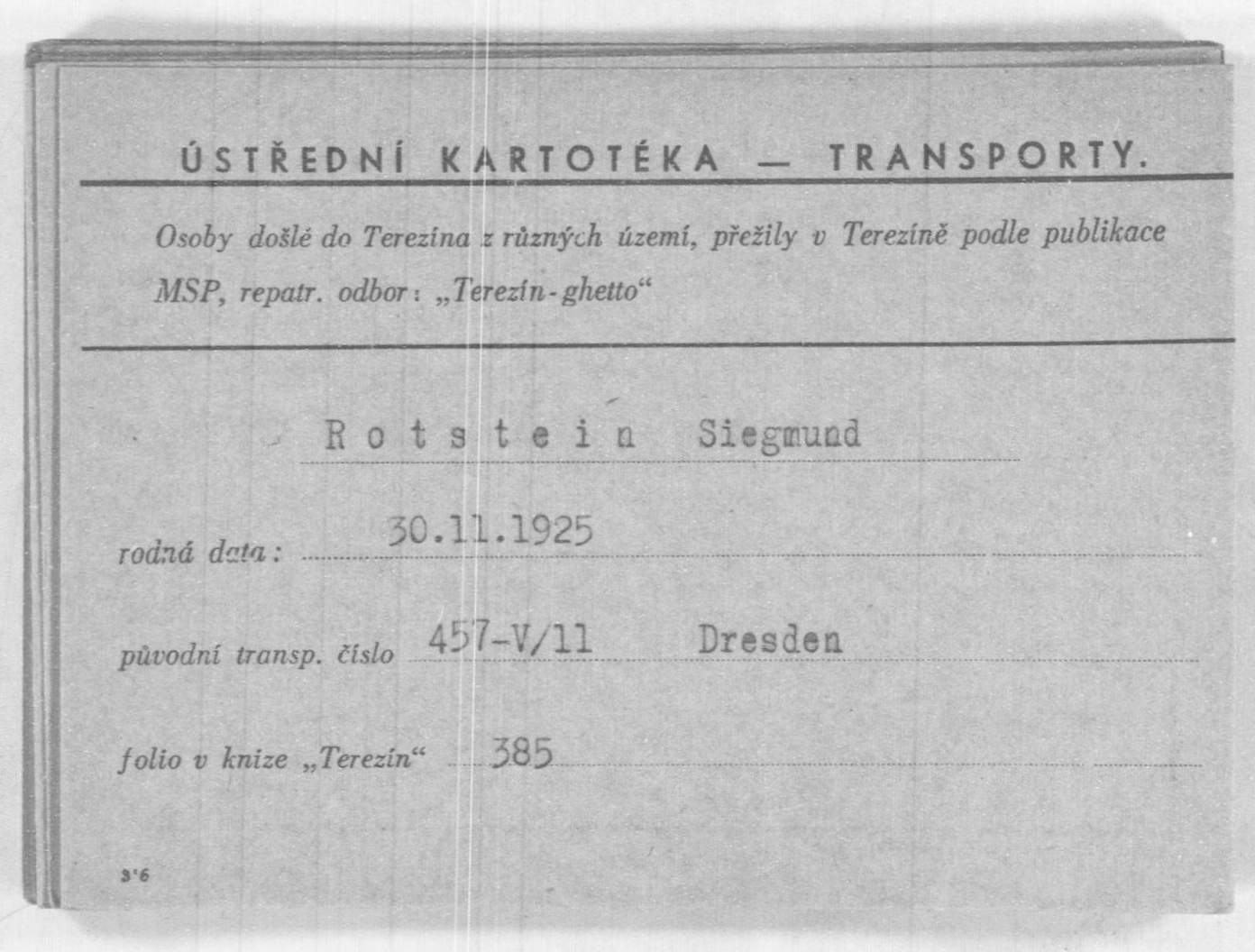
On 14 February 1945, he and his brother Roland were deported to Theresienstadt and forced to work in the demolition and civil engineering unit.
Back in Chemnitz
After the liberation, he returned to Chemnitz on 9 June 1945. He helped found the Jewish Community of Chemnitz before going on to train as a tailor and attend the master tailor’s school.
In 1950, he married Marianne Braeuer; two years later, they had a daughter.


Life in Chemnitz
From 1956 onwards, Rotstein held senior positions at the CENTRUM department stores in Karl-Marx-Stadt and worked as deputy director of sales until 1986.
Within the Jewish community, he had been a member of the community council since 1961, becoming its chairman in 1966. He was elected to the advisory board of the Association of Jewish Communities in the GDR and served as vice-president from 1969, becoming president of the organisation in March 1988. In this role, he played a key part in organising the celebrations in the GDR to mark the 50th anniversary of the November pogroms in 1988. Following reunification, he served as Chairman of the Saxony-Thuringia Regional Association from 1990 to 1995 and was appointed to the Executive Board of the Central Council of Jews in Germany. Until 2002, he served as Chairman of the Saxony Regional Association and was a key initiator of the construction of the new synagogue on Kapellenberg in Chemnitz.
He served as Chairman of the Board of the Jewish Community until 2006; a year later, he was awarded honorary citizenship of the city of Chemnitz.
His wife died in 2006. He died in Chemnitz on 6 August 2020 and was buried in the Jewish Cemetery.
In his honour, a panel discussion will be held at Chemnitz Town Hall on 3 December 2025 to mark his 100th birthday.