Heinz-Joachim Dataschwili
Until the end of the war in Chemnitz
* 17.02.1921 in Chemnitz
✡ 25.03.1981 in Karl-Marx-Stadt

Life and Work
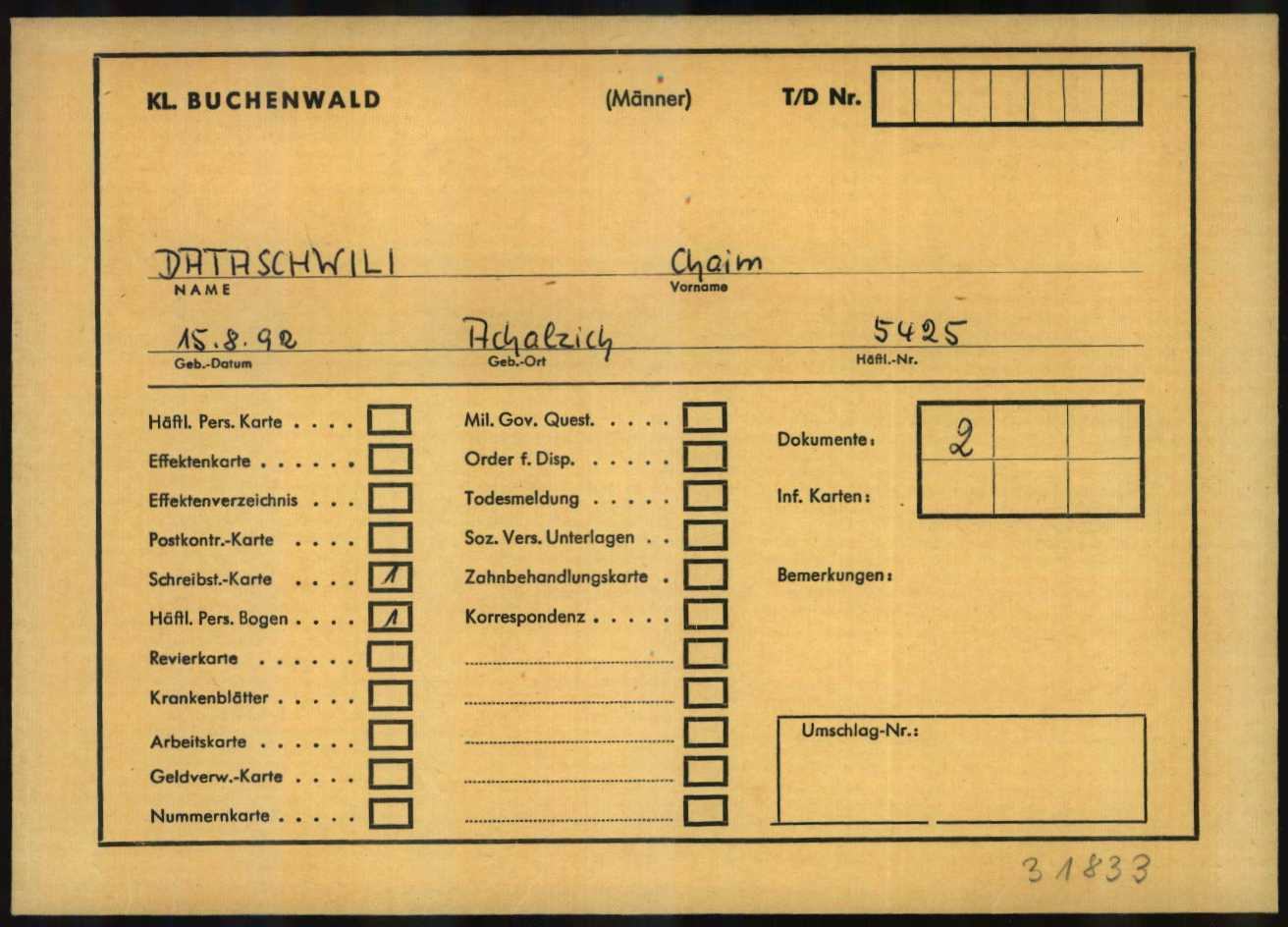
Heinz-Joachim Dataschwili came from a German-Georgian family. His father, Chaim (born 15 August 1892), was born in Akhaltsikhe, Georgia, and worked as a manual labourer; his mother, Getrud Johanna Roscher (born 11 November 1896), worked in a restaurant. Heinz-Joachim attended the orphanage school and the Jewish religious school before completing an apprenticeship as a painter. Until 1937, he worked as a cinema projectionist and as a market assistant for the Jewish shopkeeper Joseph Kiewe.
Life under National Socialism
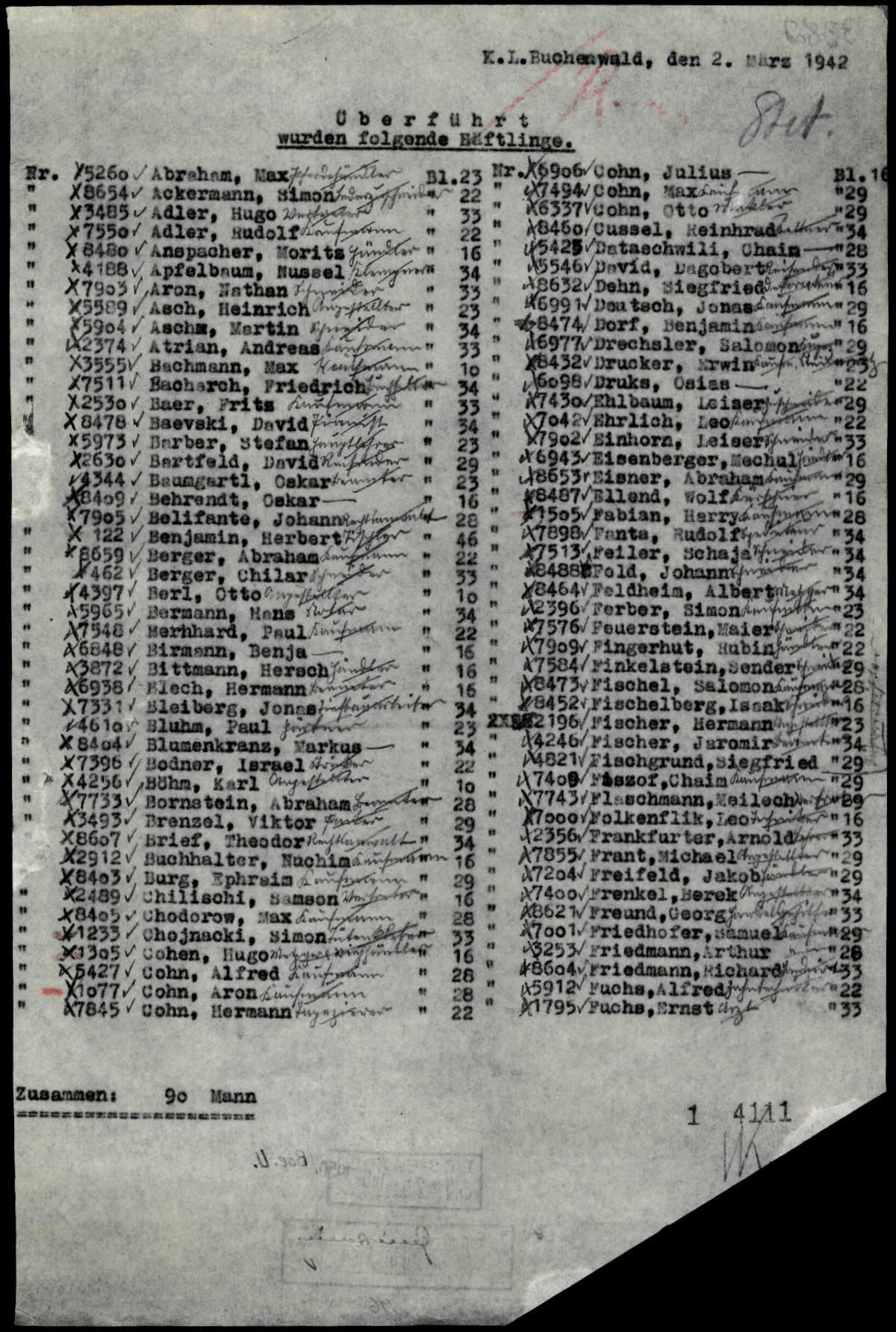
During the November pogroms of 1938, Heinz-Joachim was temporarily placed in “protective custody” – as a Jew and a former Soviet citizen, he was subject to special police supervision. His father, on the other hand, was arrested and deported to Buchenwald concentration camp. In March 1942, he was taken, along with 89 other Jewish men, to the Bernburg extermination centre. This presumably took place as part of “Aktion 14 f 13”, a code name covering the deportation and killing of sick and unfit-for-work concentration camp prisoners, including many Jews.
Surviving in Chemnitz
Heinz-Joachim avoids having his assets frozen because he has none, and hatches plans to flee to the Georgian Soviet Republic – but these come to nothing.
From the summer of 1941, he is a forced labourer at the brickworks and at the E. F. Barthel lighting fittings factory in Altchemnitz. There, in the military department, he is forced to spray grenade casings with nitro paint under poor working and living conditions. As a result, he develops a lung condition. His health improves temporarily thanks to the help of the Jewish doctor Dr Adolf Lipp. During the bombing of the town on 5 March 1945, he finds refuge in the parish of Claußnitz.

“Back” in Chemnitz
After the war, Dataschwili resumed his work as a film projectionist at the ‘Biograph-Theater’ in Chemnitz (formerly 34 Königsstraße, city centre) and became a founding member of the new Jewish Community of Chemnitz. In August 1945, he married Gertrud Helene Friedmann, but they divorced after a year. In 1950, he married Dorothea Schmidt from Upper Silesia, who was four years his junior, and they had a son.
Following a recurrence of tuberculosis, he spent regular periods in sanatoriums. He died on 25 March 1981 as a result of his long-standing lung disease and was buried in the Jewish Cemetery in Chemnitz. He spent his final days living in the Jewish Community Centre at 28 Stollberger Straße. His widow died on 22 July 1998 in Rostock, where their son lives.